Are You Getting the Most Out of Your Workouts?

You finished your workout. You're tired. Your shirt is soaked, your muscles are pumped, and you did more work than you planned.
Great workout, right?
Maybe... Maybe not.
Working harder is easy to measure. More weight. More reps. More sets. Longer workouts. More sweat.
But none of those things, by themselves, tell you whether you had a better workout.
While putting in that kind of effort certainly has its own benefits, it may not be beneficial to exactly what you're trying to accomplish.
If you're trying to get stronger, did today's workout move you toward that goal? If you're trying to build muscle, did your training support it?
The weight you use, the reps you perform, how long you rest, and how well you've recovered all affect the answer.
Those are the questions that matter.
A better workout isn't the workout where you did the most. It's the workout where what you did best served what you're trying to accomplish.
That is where maximizing your workouts begins.
Start With Your Goal
Your goal determines how you should train.
If you want to get stronger, you need to train your body to handle heavier weight. If you want to build muscle, you need enough quality work to give your muscles a reason to grow. If you want better muscular endurance, you need to train your muscles to keep working as fatigue builds.
You don't have to choose just one. Strength, muscle growth, and endurance can all be part of your training. What matters is knowing what you're trying to improve and training in a way that actually improves it.
Once you know that, decisions about sets, reps, weight, rest, and exercise selection stop being arbitrary.
How Many Reps Should You Do?
Choose your reps based on your goal.
Strength training puts greater emphasis on heavier resistance and lower repetitions. Muscle can be built across a broader range of repetitions with sufficient training volume and effort. Muscular endurance shifts toward lighter resistance and higher repetitions.
Don't chase a number simply because you've heard that 5, 8, 10, or 12 reps is the "right" number.
Ask yourself:
What is this set supposed to accomplish?
Then choose the weight and repetitions that support it.
How Many Sets Should You Do?
Do enough sets to create a productive training stimulus. Don't add sets simply to make the workout harder or longer.
You also need to consider the entire workout and your total training volume. Three sets of bench press don't exist independently from the incline presses, cable work, or other chest exercises you perform that day or later in the week.
More work isn't automatically better work.
Do the amount of work that supports your goal and that you can recover from.
Explore how eFitLog helps you build workouts and routines →
Should You Lift Heavier or Do More Reps?
Both can represent progress.
If you bench 225 pounds for six reps and eventually perform it for eight, you improved.
If you increase the weight while maintaining the same quality of execution, you improved.
If you perform the same weight and reps with better control and technique, you improved.
Adding weight is one form of progressive overload, but progress is bigger than the number on the bar.
The objective is to increase what your body is capable of doing over time.
Don't Sacrifice Form for Weight
Moving more weight doesn't mean much if you have to change the exercise to do it.
Using momentum, shortening your range of motion, changing your body position, or allowing other muscles to take over may let you move more weight without making the exercise more productive.
Sometimes improving your form requires lowering the weight.
Do it.
Use the weight that lets you perform the exercise correctly and train what you're actually trying to train.
How Long Should You Rest Between Sets?
Rest according to the work you're trying to perform.
Heavy strength training requires enough recovery to produce another strong effort. Two to three minutes or longer can make sense when your goal is producing maximum effort on demanding sets.
Higher-repetition, muscular-endurance, or conditioning-focused training can use shorter rest periods when fatigue and cardiovascular demand are part of the training objective.
Don't rush into your next heavy set simply because a timer reached 60 seconds.
Rest is part of your workout. Use it with the same purpose as your sets and reps.
Strength Training and Cardio Can Work Together
You don't have to choose between strength and cardiovascular fitness.
You can lift weights and run, walk, cycle, row, hike, or perform other forms of cardio. You can also increase the cardiovascular demands of resistance training through shorter rest periods, circuits, and higher-repetition work.
Just understand what you're changing.
Heavy sets with longer rests create different demands than lighter sets performed quickly with little rest.
Neither is better simply because one leaves you more exhausted.
Again, it comes back to your goal.
Explore how eFitLog brings strength and cardio tracking together →
Your Workout Starts Before Your First Set
Your performance doesn't begin when you touch the weights.
Sleep matters. Nutrition matters. Hydration matters. Recovery matters.
So does preparation.
Know what you're training before you start. Have your workout ready. Warm up. Prepare your equipment. Remove unnecessary distractions and get to work.
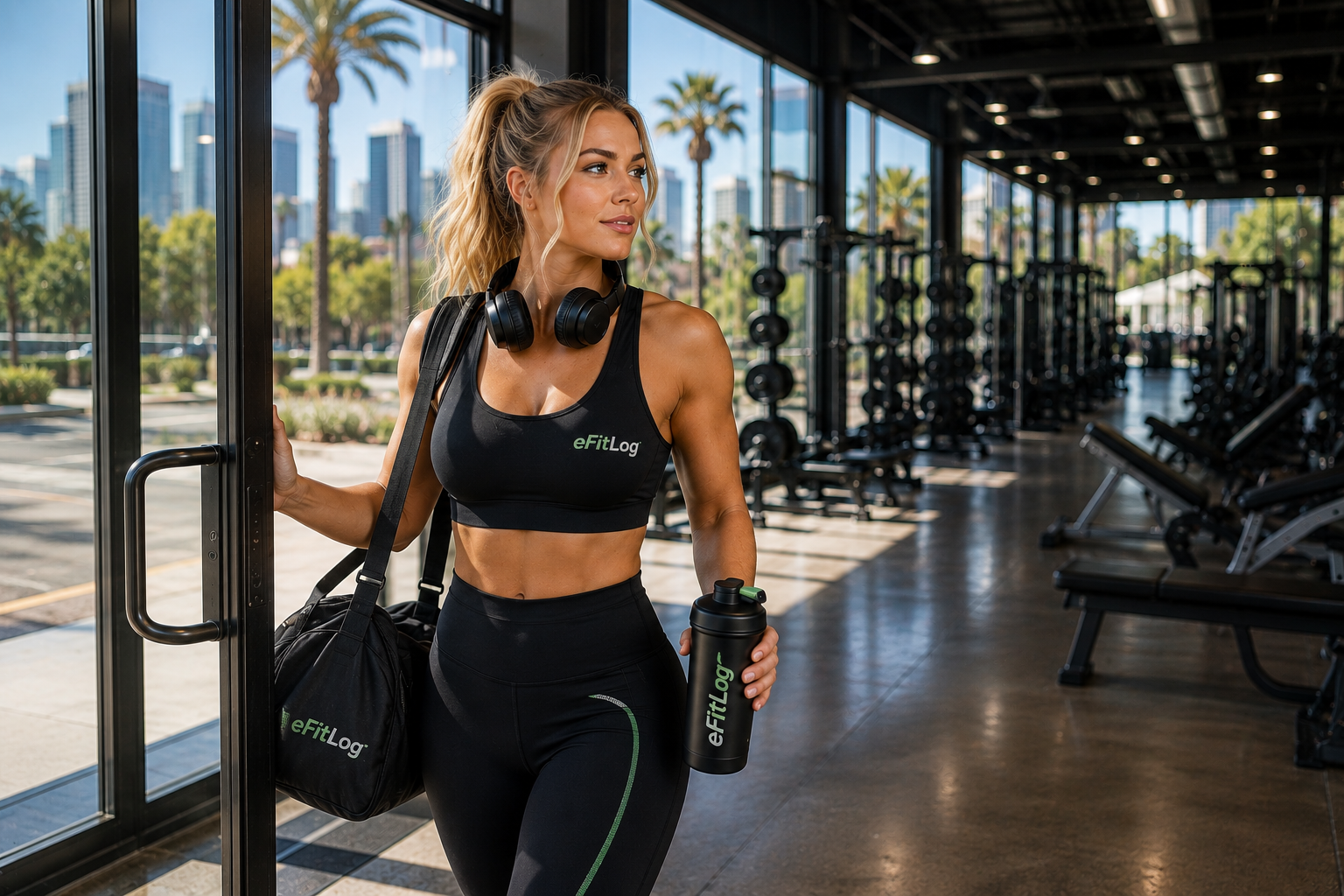
You don't need perfect conditions to have a productive workout.
You do need to give yourself a reasonable opportunity to perform well.
Progressive Overload Is More Than Adding Weight
Progressive overload means increasing the demands of your training as your body adapts.
You can add weight. You can perform more repetitions. You can increase productive volume. You can improve your execution. You can perform a workload that once exhausted you with greater control.
You also won't progress every workout.
Strength and muscle are built over time. One great workout doesn't transform you, and one bad workout doesn't erase your progress.
Look for the trend.
Progress is easier to recognize when you can actually see it. Tracking your weights, sets, reps, and workout history gives you something more reliable than memory to measure against.
Over time, those individual workouts become a record of whether your training is actually moving forward.
Explore how eFitLog tracks lift history and strength trends →
Track Your Workouts
You probably remember your biggest lifts.
The details disappear much faster.
What weight did you use six weeks ago? How many reps did you get on the third set? Is your bench actually stalled, or does it just feel stalled? Are you doing more work than you were three months ago?
Tracking your workouts gives you those answers.
Your workout history lets you compare sets, reps, weights, volume, personal records, and performance over time instead of relying on memory.
The point isn't to spend your workout staring at a log.
Record the work. Get back to training. Let your workout history build. Use it when you need it.
Explore eFitLog's strength training and workout tracking tools →
Know What You're Working Toward
Sometimes your goal is broader: get stronger, build muscle, improve your conditioning, or simply become more consistent.
Other times the goal is sitting right there on the bar.
Maybe you want to bench 225 pounds. Maybe you're working toward 315. Maybe you're preparing to test a new one rep max.
When the goal becomes a specific maximum lift, preparation matters. Your warm-up and ramp-up sets should prepare you for the attempt without exhausting you before you get there.
Guessing your way through increasingly heavy sets can turn the warm-up itself into part of the challenge.
That's why eFitLog's One-Rep-Max (1RM) Calculator goes beyond simply estimating your max. Enter the weight you want to attempt and eFitLog builds a science-based, percentage-driven ramp-up designed to progressively prepare you for that lift. Instead of guessing which weights and reps to use on the way up, you have a plan for getting to your attempt.
Explore eFitLog's One-Rep-Max (1RM) Calculator and science-based percentage ramp-up →
Pay Attention and Adjust
Your workout plan gives you direction. It doesn't know exactly how you're going to perform today.
Some days you'll be stronger. Some days you'll struggle with weights you handled easily the week before. Pay attention to those differences without overreacting to them.
The same applies when progress slows. Changing something may make sense. Changing everything doesn't.
New exercises. New routines. Different rep ranges. More sets. Less rest. More weight. A different workout split.
Change too many things at once and you won't know what worked—or whether you abandoned something that was working before you gave it enough time.
Stay consistent. Track what you're doing. Watch what happens. Change something when you have a reason.
Your plan tells you what you intended to do. Your results tell you whether it's working.
That's a philosophy we believe strongly in at eFitLog: train with confidence, plan with purpose, and measure what matters most. Your workout shouldn't just give you something to do. It should give you something you can learn from and build on.
Are You Getting the Most Out of Your Workouts?
There is no single secret to maximizing your workouts.
The perfect rep range won't do it. Neither will another exercise, another set, a shorter rest period, a longer workout, or simply adding more weight.
Results come from getting the important things right consistently.
Know your goal. Train for it. Use appropriate weight. Perform quality repetitions. Do enough productive work. Rest according to what you're trying to accomplish. Recover. Track your progress. Pay attention to the results. Adjust when necessary.
You don't need to make every workout longer, harder, or more complicated.
You need to make the work you're already doing count.
← Back to Blog